

Table of Contents
- Common Types of Loans
- Primary Loan Categories
- Collateralized versus Non-Collateralized Lending
- Additional Lending Options
- Essential Loan Terminology
- The Quick Guide to Choosing the Right Type of Loan for Your Needs
- Secured vs. Unsecured Loans: The Fundamental Difference
- Fixed-Rate vs. Variable-Rate Loans: How Your Interest Is Calculated
- Common Personal Loans for Everyday Financial Needs
- Unsecured Personal Loans for Debt Consolidation or Home Improvement
- Installment Loans for Predictable Monthly Payments
- Credit Builder Loans for Establishing a Financial Track Record
- Asset-Backed Loans for Major Purchases and Life Milestones
- Mortgages: Financing Your Home Purchase
- Auto Loans: New and Used Vehicle Financing
- Home Equity Loans and HELOCs: Tapping Into Your Home's Value
- Educational and Student Loan Options
- Federal Student Loans: Benefits and Protections
- Private Student Loans: Filling the Funding Gap
- Short-Term and Emergency Financing Solutions
- Credit Card Cash Advances: Instant but Expensive Access
- Payday Loans and Title Loans: High-Risk Emergency Options
- Buy Now, Pay Later (BNPL) and Point-of-Sale Financing
- The Real Cost of Borrowing: Beyond the Interest Rate
- Understanding APR vs. Interest Rate
- Common Fees: Origination, Prepayment, and Late Penalties
- Total Repayment Examples: How Loan Terms Affect Your Bottom Line
- Smart Alternatives to Taking Out a New Loan
- Common Pitfalls and Myths About Personal Borrowing
- Why the Lowest Monthly Payment Isn't Always the Best Deal
- How to Apply: A Step-by-Step Checklist
- How Multiple Loan Applications Affect Your Credit Score
- Frequently Asked Questions About Choosing a Loan
- Which type of loan is the easiest to get with bad credit?
- Can I pay off my loan early to save on interest?
- How long does it take to get funds after a loan approval?
Navigating the complex world of borrowing can feel overwhelming when you’re trying to find the perfect balance between affordability and immediate financial relief. This guide breaks down the most common lending structures to help you identify which specific loan product aligns with your credit profile and long-term goals. Our analysis is rooted in current U.S. market trends and rigorous financial data to ensure you make a confident, informed decision for your wallet.
Common Types of Loans
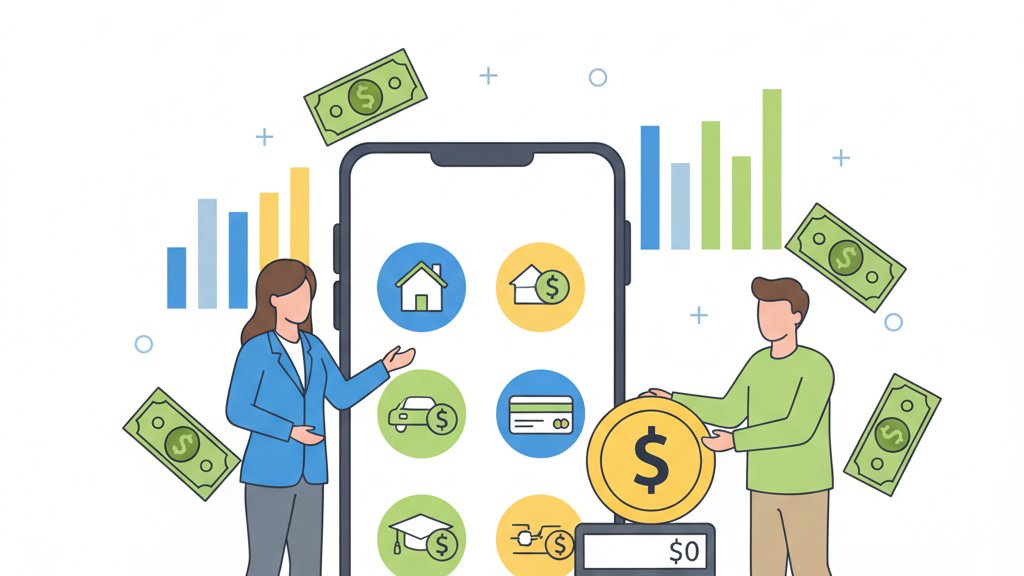
Financial loans serve as essential instruments classified into two main categories: secured loans (requiring collateral as backing) and unsecured loans (relying on the borrower’s credit profile). These lending products fulfill diverse needs such as real estate purchases, vehicle acquisitions, or debt management. The primary loan categories encompass personal loans, home mortgages, vehicle financing, educational loans, and commercial lending, each available with either stable or adjustable interest rate structures.
Primary Loan Categories
- Personal Financing: Flexible, generally uncollateralized lending options utilized for various expenditures including debt restructuring, property renovations, or healthcare expenses.
- Home Mortgage: Real estate acquisition financing, encompassing FHA programs, Traditional mortgages, and Jumbo financing options.
- Vehicle Financing: Collateral-backed loans designated exclusively for automobile purchases.
- Educational Loans: Government-sponsored or private student loans created to finance academic expenses, frequently offering postponed repayment schedules.
- Commercial Business Loans: SBA financing programs, fixed-term lending, or loans with business credit check for business launch expenses or growth initiatives.
Collateralized versus Non-Collateralized Lending
- Collateralized: Demands asset backing (such as property or vehicles) to guarantee the loan, generally providing reduced interest charges.
- Non-Collateralized: Dependent on creditworthiness, including personal financing or credit card products, commonly carrying elevated interest charges.
Additional Lending Options
- Property Equity Loans/Credit Lines: Leveraging accumulated home equity for borrowing purposes.
- Credit Development Loans: Modest lending products structured to establish credit history.
- Short-Term Cash/Vehicle Title Loans: Elevated-interest, brief-duration, substantial-risk lending for urgent financial requirements.
Essential Loan Terminology
- Stable-Rate: Interest percentages stay constant across the entire loan duration.
- Adjustable-Rate (ARM): Interest percentages fluctuate according to market dynamics.
The Quick Guide to Choosing the Right Type of Loan for Your Needs
The fastest way to determine which of the many types of loans is right for you is to look at your “why.” If you are buying a specific asset like a house or a car, specialized installment loans (mortgages or auto loans) offer the lowest rates because the asset acts as collateral. For everything else—from medical bills to debt consolidation—a $7000 personal loan is a common starting point for mid-sized expenses, offering a lump sum of cash with a fixed repayment schedule usually ranging from 24 to 84 months.
Secured vs. Unsecured Loans: The Fundamental Difference
A secured loan requires you to pledge an asset, such as your home, car, or a savings account, as collateral. Because the lender can seize this asset if you fail to pay, these loans typically carry lower interest rates, often ranging from 3% to 10% depending on the asset. Conversely, unsecured loans require no collateral; lenders approve you based solely on your creditworthiness. While safer for your physical assets, these carry higher APRs—anywhere from 6% to 36%—to compensate the lender for the increased risk.
Fixed-Rate vs. Variable-Rate Loans: How Your Interest Is Calculated
Fixed-rate loans lock in your interest rate for the entire life of the loan, ensuring your monthly payment never changes—a “set it and forget it” strategy ideal for long-term budgeting. Variable-rate loans (or adjustable-rate loans) often start with a lower “teaser” rate but fluctuate based on market indices like the Prime Rate. In a rising interest rate environment, a variable loan that starts at 5% could easily climb to 8% or 10%, significantly increasing your total cost of borrowing.
Important: Always check if a variable-rate loan has a “cap.” A cap limits how high your interest rate can rise, protecting you from extreme market volatility that could make your monthly payments unaffordable.
Common Personal Loans for Everyday Financial Needs
Personal loans are the Swiss Army knife of the financial world. Most American lenders, including major banks like Wells Fargo or digital lenders like SoFi and Marcus, offer these with loan amounts typically ranging from $1,000 to $50,000. For a borrower with a “Good” credit score (700+), you can expect instant approval personal loans from many online providers with an APR between 10% and 15%. If your score is “Excellent” (740+), you might see rates drop into the single digits.
Unsecured Personal Loans for Debt Consolidation or Home Improvement
One of the smartest uses for an unsecured personal loan is debt consolidation. If you are carrying $10,000 in credit card debt at a 24% APR, taking out a personal loan at 12% APR to pay off those cards can save you thousands in interest and shorten your path to being debt-free. Similarly, for home improvements that don’t require six-figure budgets, these loans provide quick funding (often within 24-48 hours) without the need to tap into your home’s equity.
| Loan Type | Typical APR Range | Best For | Example Total Cost ($10k Loan / 3 yrs) |
|---|---|---|---|
| Personal Loan (Excellent Credit) | 6% – 10% | Debt Consolidation | $10,962 (at 6% APR) |
| Personal Loan (Average Credit) | 15% – 20% | Emergency Repairs | $12,479 (at 15% APR) |
| Credit Card Cash Advance | 25% – 30% | Immediate Cash | $14,191 (at 25% APR) |
Installment Loans for Predictable Monthly Payments
Most personal loans are structured as installment loans, meaning you pay back the principal plus interest in equal monthly “installments.” This is a disciplined way to borrow compared to credit cards. Before signing, always use an amortization calculator to see how much of your monthly payment goes toward interest versus principal. In the early months of a 60-month loan, a larger portion of your payment covers interest, while the final year focuses almost entirely on the principal balance.
Credit Builder Loans for Establishing a Financial Track Record
If you have no credit history or are recovering from bankruptcy, a credit builder loan is a unique tool. Unlike a standard loan where you get the money upfront, the lender holds the “loan” amount in a locked savings account while you make monthly payments. Once the term ends, you receive the money back, and the lender reports your on-time payments to the credit bureaus (Equifax, Experian, and TransUnion), effectively boosting your score.
Asset-Backed Loans for Major Purchases and Life Milestones
When you are making the largest purchases of your life, you need the specialized types of loans designed for those specific assets. These are almost always secured loans, which allows for much longer repayment terms—up to 30 years for homes—and significantly lower interest rates than personal loans.
Mortgages: Financing Your Home Purchase
A mortgage is a long-term loan specifically for real estate. In the U.S. market, the 30-year fixed-rate mortgage is the gold standard, though 15-year options offer lower rates for those who can afford higher monthly payments. Beyond the interest rate, you must account for “points” (prepaid interest), private mortgage insurance (PMI) if your down payment is less than 20%, and closing costs, which typically range from 2% to 5% of the home’s purchase price.
Auto Loans: New and Used Vehicle Financing
Auto loans are secured by the vehicle itself. While dealerships offer “on-the-spot” financing, it is almost always more cost-effective to get a pre-approval from a credit union or bank first to secure the cheapest auto loan rates available. For a new car, rates for prime borrowers often hover around 5-7%, while used car rates are generally 1-2% higher. Be wary of “long-bond” auto loans exceeding 72 months; while they lower the monthly payment, you risk becoming “upside down,” owing more than the car is worth as its value depreciates.
Home Equity Loans and HELOCs: Tapping Into Your Home’s Value
If you have built up equity in your home, you can use it as collateral for a Home Equity Loan or a Home Equity Line of Credit (HELOC). A Home Equity Loan provides a lump sum with a fixed rate, whereas a HELOC works like a credit card backed by your house, allowing you to draw funds as needed. Because these are secured by your primary residence, the interest rates are very low, but the risk is high: if you default, you could lose your home.
Educational and Student Loan Options
Education is an investment, and the loan market reflects this with specialized terms. However, not all student loans are created equal, and the protections vary wildly between government-backed and private options.
Federal Student Loans: Benefits and Protections
Federal loans should always be your first choice. They offer fixed interest rates that are usually lower than private loans and come with unique protections like Income-Driven Repayment (IDR) plans, deferment, and Public Service Loan Forgiveness (PSLF). You don’t need a credit check or a co-signer for most federal undergraduate loans, making them highly accessible.
Private Student Loans: Filling the Funding Gap
Private student loans are offered by banks like Sallie Mae or SoFi. These should only be used after you have exhausted your federal limits. They require a credit check and often a co-signer. Unlike federal loans, private lenders rarely offer subsidized interest (where the government pays the interest while you’re in school), and their repayment terms are much less flexible.
Short-Term and Emergency Financing Solutions
Sometimes you need cash immediately for a car repair or a medical emergency. While these types of loans are accessible, they are the most expensive way to borrow money and should be used with extreme caution.
Credit Card Cash Advances: Instant but Expensive Access
Most credit cards allow you to withdraw cash at an ATM up to a certain limit. However, the interest rate on a cash advance is typically 5-10% higher than your standard purchase APR, and there is no grace period—interest starts accruing the second the cash hits your hand. Additionally, expect a flat fee of around 3% to 5% of the amount withdrawn.
Payday Loans and Title Loans: High-Risk Emergency Options
Payday loans are small, short-term loans intended to be paid back on your next payday. While they seem convenient, their APRs can reach a staggering 400%. If you borrow a $500 loan for two weeks, you might pay $75 in fees—which sounds small, but if you can’t pay it back and “roll over” the loan, you can quickly fall into a debt trap. Title loans use your car’s title as collateral and carry similar risks; if you can’t pay, the lender takes your transportation.
Buy Now, Pay Later (BNPL) and Point-of-Sale Financing
Services like Klarna, Affirm, and Afterpay have revolutionized retail. They typically split a purchase into four interest-free installments. While great for managing cash flow on a $200 purchase, “stacking” multiple BNPL plans can lead to overspending. If you miss a payment, some providers will pivot to a high-interest model or charge significant late fees.
The Real Cost of Borrowing: Beyond the Interest Rate
To truly understand the cost of a loan, you must look at the Annual Percentage Rate (APR). The interest rate is just the cost of principal, but the APR includes the interest plus any mandatory fees. For example, if you take a $10,000 loan at 10% interest with a 5% origination fee ($500), your actual APR is closer to 12.5% because you only received $9,500 but are paying interest on $10,000.
Understanding APR vs. Interest Rate
When comparing different types of loans, always use the APR as your “apples-to-apples” metric. A loan with a 7% interest rate and high fees might actually be more expensive than a loan with an 8% interest rate and zero fees. Federal law requires lenders to disclose the APR prominently before you sign a loan agreement—read it carefully.
Common Fees: Origination, Prepayment, and Late Penalties
Always ask about an “origination fee,” which is a one-time upfront fee for processing the loan. More importantly, check for “prepayment penalties.” Some lenders, particularly in the auto and mortgage space, charge you a fee if you pay the loan off early, because they lose out on the future interest you would have paid. Avoid these whenever possible.
Total Repayment Examples: How Loan Terms Affect Your Bottom Line
Example: Borrowing $5,000 at 15% APR for 24 months results in a monthly payment of $242.43 and a total repayment of $5,818.32. If you increase that term to 60 months, the payment drops to $118.95, but the total repayment jumps to $7,137.00—costing you an extra $1,318 in interest alone.
Smart Alternatives to Taking Out a New Loan
Before committing to a new monthly obligation, explore alternatives that don’t involve high-interest debt. This is the hallmark of responsible financial management. If you are in a cycle of borrowing to pay for living expenses, a loan is usually a “band-aid” for a budgeting issue that needs a structural fix.
- Employer Payroll Advances: Check if your HR department uses services like Even or DailyPay for interest-free access to earned wages.
- Asset Liquidation: Selling an old smartphone or unused furniture on local marketplaces can often cover a small $300-$500 emergency gap.
- 0% APR Credit Cards: If you have good credit, a new card with a 12-18 month 0% intro period is cheaper than any personal loan.
- Community Assistance: Local non-profits or religious organizations often have emergency funds for utility bills or rent to prevent residents from turning to payday lenders.
Common Pitfalls and Myths About Personal Borrowing
One of the biggest myths is that you should always choose the loan with the lowest monthly payment. As shown in our examples, a lower payment usually means a longer term, which results in paying much more over time. Another mistake is ignoring the “fine print” on introductory offers; a 0% APR offer for 12 months often “back-dates” the interest if you don’t pay the balance in full by the end of the promotional period.
Why the Lowest Monthly Payment Isn’t Always the Best Deal
Lenders love to market “low monthly payments” because it makes expensive debt look affordable. Always multiply the monthly payment by the number of months in the term to see the “Total Price” of the loan. If a $10,000 car costs you $15,000 after 72 months of payments, you have to ask yourself if that car is truly worth the 50% premium.
How to Apply: A Step-by-Step Checklist
- Check your credit score: Use a free service to know your standing before lenders do.
- Calculate your DTI: Ensure your Debt-to-Income ratio (monthly debt payments divided by gross monthly income) is below 36%.
- Gather documentation: Have your last two pay stubs, W-2s, and a government-issued ID ready.
- Get pre-qualified: Apply with 3-4 lenders who offer “soft credit pulls” to compare APRs without hurting your score.
- Read the final disclosure: Check for hidden origination fees or prepayment penalties before signing.
How Multiple Loan Applications Affect Your Credit Score
Every time you apply for a loan, a “hard inquiry” is placed on your credit report, which can dip your score by a few points. However, for “rate shopping”—like looking for a mortgage or auto loan—credit scoring models usually treat all inquiries within a 14-to-45-day window as a single event. Actionable advice: Do all your loan shopping within a two-week window to protect your score.
Frequently Asked Questions About Choosing a Loan
Which type of loan is the easiest to get with bad credit?
Secured loans (like a title loan or a pawnshop loan) are the easiest but most dangerous. A better alternative is a “Secured Personal Loan” from a credit union, where you use your own savings account as collateral. Credit builder loans are also specifically designed for those with poor or no credit.
Can I pay off my loan early to save on interest?
In most cases, yes. Most modern personal loans from reputable online lenders do not have prepayment penalties. However, always verify this in your loan agreement. If there is no penalty, making just one extra payment per year toward your principal can shave months off your loan and save you hundreds in interest.
How long does it take to get funds after a loan approval?
For online personal loans, funds are often deposited into your bank account within one to three business days. Some lenders offer “same-day” funding if you are approved before a certain time (usually noon EST). Mortgages and large business loans take much longer, typically 30 to 45 days due to the extensive documentation and appraisal requirements.
Before you sign any agreement, always compare the APR rather than just the monthly payment to ensure you aren’t overpaying for your capital. My final advice is to get pre-qualified with at least three lenders this week to see your personalized rates without impacting your credit score.
Read more about related topics
- Instant Cash Advance to Bank Account: Fast Money When You Need It
- Risks of Cosigning a Loan: What You Need to Know Before Signing
- Peer to Peer Lending: Your Guide to Direct Investment Opportunities
- Fast Cash Loans No Credit Check: Quick Approval in 24 Hours
Sources & References
- Tips for managing family lending and borrowing (consumerfinance.gov)
- Federal Reserve Board – Consumer Credit G.19 (federalreserve.gov)
- Consumer Lending – FDIC (fdic.gov)

This guide really helped clarify the differences between secured and unsecured loans. I was trying to figure out the best way to finance a new car last month and was a bit lost, but understanding the collateral aspect made a big difference. It’s good to know that even without a huge down payment, there are still options.
I’m still a bit fuzzy on how interest rates are determined for personal loans, specifically for unsecured ones. The article mentions credit profile, but are there other major factors that lenders heavily weigh? I’m looking to consolidate some debt soon and want to be as prepared as possible.
That’s a great question, Laura! For unsecured personal loans, while credit profile is king, lenders also consider your income stability, debt-to-income ratio, and the loan amount requested. A stronger overall financial picture often leads to better rate offers.
The breakdown of different loan types was super helpful. I’ve always just thought of loans as ‘borrowing money,’ but seeing how specific ones are for mortgages or vehicles makes a lot more sense. Definitely bookmarking this for future reference when any big purchases come up.