

Table of Contents
- Is Social Security Administration a Scam?
- Core Elements of the Social Security System
- Recognizing Fraudulent Social Security Schemes
- Is the Social Security Administration a Scam? The Definitive Answer
- Distinguishing Between the Federal Agency and Social Security Scams
- Why You Received a Suspicious Call or Email Claiming to Be From the SSA
- How the Social Security System Actually Works in the United States
- The Legal Mandate: The Social Security Act of 1935
- How Your Payroll Taxes (FICA) Fund Current Retiree Benefits
- The Role of the Social Security Trust Funds and Oversight
- The Real Costs: Taxes, Credits, and Your Lifetime Contributions
- Understanding FICA Tax Rates: How Much You Pay Into the System
- The 40 Credits Rule: The Minimum "Cost" to Qualify for Benefits
- Taxation of Benefits: Why Some Retirees Pay Money Back to the IRS
- Common Red Flags: How to Spot a Real Social Security Scam
- Demands for Immediate Payment via Gift Cards or Wire Transfers
- Threats of Arrest or Legal Action Regarding Your Social Security Number
- Promises of Benefit Increases in Exchange for Personal Information
- Alternatives to Relying Solely on Social Security for Retirement
- Employer-Sponsored Plans: 401(k) and 403(b) Contributions
- Individual Retirement Accounts (IRA): Traditional vs. Roth Options
- Personal Savings Strategies and High-Yield Accounts
- Delaying Retirement: The Financial Impact of Waiting Until Age 70
- Common Myths and FAQs About Social Security’s Future
- Will Social Security Run Out of Money Before I Retire?
- Can the Government "Steal" the Social Security Trust Fund?
- Is Social Security a Ponzi Scheme? Understanding the Economic Differences
- What to Do if You Have Been Targeted by a Social Security Impersonator
- Reporting Fraud to the Office of the Inspector General (OIG)
- How to Freeze Your Credit if Your Social Security Number is Compromised
- Official Contact Methods: How to Securely Reach the Real SSA
If you’ve recently received a threatening phone call or a suspicious email claiming your benefits are suspended, it is completely natural to wonder if the Social Security Administration itself has become a platform for fraud. In this guide, we will break down the crucial differences between the legitimate federal agency and the sophisticated imposter scams targeting your wallet, while explaining exactly how the system handles your hard-earned tax dollars. Our analysis is based on the latest consumer protection data and verified federal protocols to ensure you can navigate your retirement security with absolute confidence and zero fear.
Is Social Security Administration a Scam?
The Social Security system represents a genuine federal social insurance initiative, not a fraudulent operation. This program receives funding through employment taxes and delivers benefits for retirement, disability cases, and surviving family members. The mechanism works by gathering tax contributions from today’s workforce to distribute payments to those currently receiving benefits. Although the program encounters financial sustainability concerns for the future, it doesn’t function as a pyramid scheme.
Core Elements of the Social Security System
- Function: The program serves as an essential economic protection layer, substituting approximately 40% of a typical employee’s income from their working years.
- Revenue Source: The system receives money through employment taxes (FICA/SECA) contributed by both workers and their employers.
- Long-term Viability: The program continues to face ongoing discussions about its future financial stability.
Recognizing Fraudulent Social Security Schemes
Although the actual program operates legitimately, widespread impersonation fraud exists where criminals pose as representatives from the Social Security Administration (SSA) attempting to obtain funds or sensitive personal data. If you are struggling with high interest rates or unmanageable balances, you might look into debt relief programs to help stabilize your finances rather than responding to suspicious calls.
- Warning Signs: Authentic SSA personnel will never issue arrest threats, claim to deactivate your Social Security number, or request urgent payments through gift cards, wire services, or digital currency.
- Safeguarding Yourself: When receiving questionable communications via phone or email, refrain from sharing personal details. Reach out to the SSA independently through ssa.gov for confirmation, especially if they mention issues with your account.
- Typical Fraud Methods: Criminals frequently employ intimidation strategies, including allegations that your account has been linked to illegal activity or that your benefits face cancellation.
Is the Social Security Administration a Scam? The Definitive Answer
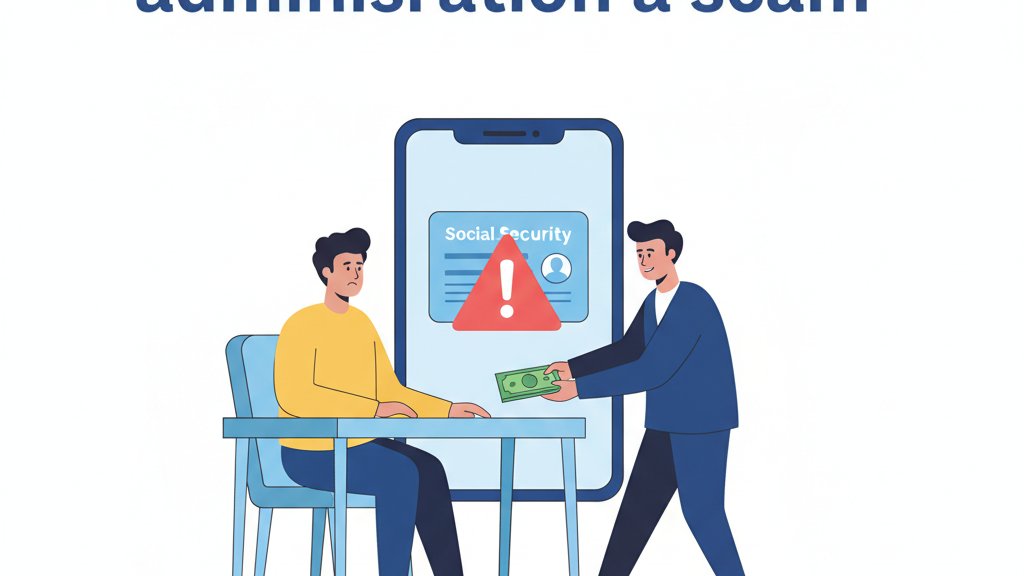
To be clear and direct: No, the Social Security Administration (SSA) is not a scam. It is a legitimate federal agency established in 1935 that manages the social insurance programs for retirement, disability, and survivor benefits in the United States. However, the reason the question “is social security administration a scam” has surged in search results is due to the astronomical rise in “imposter scams.” Fraudsters frequently pretend to be SSA employees to steal your Social Security number or your money.
Important: The Social Security Administration will never threaten you with arrest, demand immediate payment via gift cards, or promise a benefit increase in exchange for a “processing fee.” If any of these occur, you are dealing with a criminal, not a government official.
Distinguishing Between the Federal Agency and Social Security Scams
The legitimate SSA is a massive government bureaucracy that pays out billions of dollars in benefits every month to over 65 million Americans. It is funded by mandatory payroll taxes under the Federal Insurance Contributions Act (FICA). A “scam,” by definition, involves a fraudulent scheme to deprive someone of their property. While you may disagree with the fiscal health or the mandatory nature of the program, it operates under strict federal law and provides a guaranteed (though not always sufficient) income floor for retirees. To protect your identity, you should regularly check my uc credit report to ensure no unauthorized accounts have been opened in your name.
Why You Received a Suspicious Call or Email Claiming to Be From the SSA
If you received a call claiming your Social Security number (SSN) has been “suspended” or linked to a crime in Texas or at the border, you are being targeted by a criminal organization, not the government. The real SSA does not “suspend” numbers, nor do they call you out of the blue to threaten you with arrest. These scammers use “spoofing” technology to make your caller ID display the official SSA Inspector General’s phone number (1-800-772-1213) to gain your trust before attempting to steal your identity.
How the Social Security System Actually Works in the United States
Understanding the mechanics of the system is the best defense against misinformation. The SSA functions as a massive transfer payment system. Unlike a private savings account where your money sits in a vault, the money you pay in today is immediately used to pay current retirees. Any surplus is invested in special-issue U.S. Treasury bonds, which are backed by the full faith and credit of the United States government.

The Legal Mandate: The Social Security Act of 1935
Signed into law by Franklin D. Roosevelt, the Social Security Act was designed as a response to the Great Depression. It is a statutory entitlement program, meaning the government is legally obligated to pay benefits to anyone who meets the eligibility criteria. This legal framework is what separates it from private investments; while the government can change the law (such as raising the retirement age), it cannot simply “exit” the market or declare bankruptcy like a private corporation.
How Your Payroll Taxes (FICA) Fund Current Retiree Benefits
When you look at your paystub, you’ll see a deduction for FICA. This isn’t a “fee” in the traditional sense, but a social insurance premium. The current tax rate is 12.4% on earnings up to a certain cap ($168,600 in 2026). Usually, you pay 6.2% and your employer pays 6.2%. If you are self-employed, you pay the full 12.4%. This money goes into two main buckets: Old-Age and Survivors Insurance (OASI) and Disability Insurance (DI).
The Role of the Social Security Trust Funds and Oversight
The Social Security Trust Funds are managed by a Board of Trustees. Contrary to popular myths, the money isn’t a “slush fund” for Congress. By law, the surplus must be invested in interest-bearing federal securities. As of the latest reports, these funds hold trillions of dollars in reserves. While the reserves are projected to be depleted by the mid-2030s, the system will still be able to pay roughly 77% to 80% of scheduled benefits from ongoing tax revenue alone. Just as you monitor utility costs through con edison reviews, keeping an eye on federal trust fund reports is part of responsible financial planning.
The Real Costs: Taxes, Credits, and Your Lifetime Contributions
To understand if the system is “worth it,” you have to look at the math. For a worker earning $50,000 a year, the annual FICA contribution is $3,100 (matched by the employer for a total of $6,200). Over a 40-year career, that worker might contribute over $124,000 personally. If that worker retires at full retirement age and receives $2,000 a month, they would recoup their entire personal contribution in just over five years of retirement.
Example: If you earn $60,000 in 2026, your 6.2% contribution is $3,720. If you receive the average monthly benefit of $1,900 upon retirement, you recover your entire year’s contribution in just two months of benefit payments.
Understanding FICA Tax Rates: How Much You Pay Into the System
The 6.2% you contribute is fixed, but the “cost” increases as you earn more, up to the annual taxable maximum. It is important to note that Social Security is progressive: lower-income workers receive a higher “replacement rate” (the percentage of their working income that benefits cover) than high-income workers.
| Earner Level | Annual Income | Employee Tax (6.2%) | Estimated Replacement Rate |
|---|---|---|---|
| Low Earner | $30,000 | $1,860 | ~75% |
| Medium Earner | $65,000 | $4,030 | ~40% |
| High Earner | $168,600+ | $10,453 | ~27% |
The 40 Credits Rule: The Minimum “Cost” to Qualify for Benefits
You cannot simply pay in for one year and collect for life. To be “insured” under the SSA, you typically need 40 credits. In 2026, you earn one credit for every $1,730 in covered earnings, up to a maximum of four credits per year. This means you must work at least 10 years to qualify for retirement benefits. This “cost” in time and labor ensures that the system remains a work-based insurance program rather than a general welfare grant.
Taxation of Benefits: Why Some Retirees Pay Money Back to the IRS
A “hidden cost” many don’t realize until they retire is that Social Security benefits can be taxable. If your “combined income” (adjusted gross income + tax-exempt interest + half of your Social Security benefits) exceeds $25,000 for individuals or $32,000 for couples, you may owe federal income tax on up to 85% of your benefits. This is a crucial factor to include in your long-term retirement budgeting.
Common Red Flags: How to Spot a Real Social Security Scam
The “is social security administration a scam” concern usually stems from a specific interaction. To stay safe, remember that the real SSA has very specific ways of communicating. They will almost always send a letter via the U.S. Postal Service before ever calling you. If you get a call first, be on high alert.
- The caller threatens to seize your bank account or arrest you.
- The caller asks for payment via wire transfer, cryptocurrency, or gift cards.
- The caller asks you to confirm your Social Security number to “reactivate” it.
- You receive an email with “official” looking attachments that contain spelling or grammar errors.
Demands for Immediate Payment via Gift Cards or Wire Transfers
This is the biggest “tell” of a scam. No legitimate government agency—whether it’s the SSA, the IRS, or the FBI—will ever ask you to pay a fine or debt using Apple Gift Cards, Google Play cards, wire transfers through Western Union, or Bitcoin. If someone asks for payment via these untraceable methods, it is 100% a scam. Protecting your assets also means choosing affordable insurance companies to safeguard your property against other types of loss.
Threats of Arrest or Legal Action Regarding Your Social Security Number
Scammers love to use fear. They may claim your SSN was found in a car abandoned at the border with drugs in it. They will threaten to “suspend” your number or send the police to your house within the hour. The real SSA does not have the authority to arrest you, nor do they “suspend” Social Security numbers. These are scare tactics designed to stop you from thinking clearly.
Promises of Benefit Increases in Exchange for Personal Information
Some scammers take the “carrot” approach rather than the “stick.” They may call promising a “Cost of Living Adjustment (COLA) bonus” or a “COVID-19 stimulus bump” to your monthly check. They will ask you to “verify” your SSN, date of birth, and bank account routing number to “deposit the funds.” Legitimate COLA increases are automatic and do not require you to provide any information to the SSA.
Alternatives to Relying Solely on Social Security for Retirement
Because Social Security was only ever intended to replace about 40% of the average worker’s income, relying on it entirely is a risky financial move. You should treat the SSA as one leg of a “three-legged stool” of retirement, alongside personal savings and employer-sponsored plans.
Practical Scenario: John is 62 and wants to retire. If he claims now, he gets $1,500/month. By working three more years and contributing to his 401(k), he avoids drawing down his savings and increases his permanent monthly SSA check to roughly $1,860. This “alternative” of delayed gratification significantly reduces his long-term financial risk.
Employer-Sponsored Plans: 401(k) and 403(b) Contributions
If your employer offers a 401(k) match, this is effectively a 100% return on your investment. For example, if you contribute $200 a month and your employer matches it, you have “earned” an extra $2,400 a year before the money even hits the market. This is the most effective way to build a secondary income stream that you control entirely.
Individual Retirement Accounts (IRA): Traditional vs. Roth Options
If you don’t have an employer plan, or you want more control, IRAs are excellent tools. A Traditional IRA may give you a tax break today, while a Roth IRA allows for tax-free withdrawals in retirement. Diversifying your tax liability is a smart way to protect yourself against future changes in Social Security tax laws. Some investors even consider permanent coverage like whole life insurance as a supplemental way to build cash value over time.
Personal Savings Strategies and High-Yield Accounts
In a high-interest-rate environment, keeping your emergency fund in a High-Yield Savings Account (HYSA) can earn you 4% to 5% APY. This provides liquidity that Social Security does not. If you have a financial emergency, you can access these funds immediately without waiting for a government check or dealing with bureaucratic red tape. Finding the best savings account interest rate is essential for maximizing your liquid reserves.
Delaying Retirement: The Financial Impact of Waiting Until Age 70
One of the best “investments” you can make is delaying your claim. If your full retirement age is 67, but you wait until 70 to claim, your monthly benefit increases by roughly 8% for every year you wait. This “guaranteed return” is higher than most market investments and can significantly increase your lifetime payout from the SSA.
Common Myths and FAQs About Social Security’s Future
Misinformation often fuels the idea that the system is a scam. Let’s address the most common questions we hear at Econello regarding the long-term viability of the program.
Will Social Security Run Out of Money Before I Retire?
The short answer is no. As long as people are working and paying payroll taxes, money will be coming into the system. Even if the Trust Fund reserves hit zero, the incoming tax revenue is projected to cover about 77% to 80% of scheduled benefits. While a 20% cut would be significant, the system will not “disappear” or “go bankrupt.”
Can the Government “Steal” the Social Security Trust Fund?
The government cannot “steal” the money, but it does “borrow” it by issuing Treasury bonds to the Trust Fund. This is the same debt the U.S. owes to any other bondholder. To “default” on Social Security would mean the U.S. government defaulting on its own sovereign debt, which would collapse the global economy. It is in the government’s best interest to keep these obligations.
Is Social Security a Ponzi Scheme? Understanding the Economic Differences
Critics often call it a Ponzi scheme because new participants pay for old participants. However, a Ponzi scheme is a criminal enterprise based on deception and the promise of “extraordinary returns” that don’t exist. Social Security is a transparent, mandatory social insurance program regulated by law. Its “returns” are modest and its books are open to the public.
What to Do if You Have Been Targeted by a Social Security Impersonator
If you have already shared information or money with someone you suspect was a scammer, you must act fast. The “is social security administration a scam” question is often asked in the aftermath of a frightening interaction, and your priority should be damage control.
- Stop all communication: Hang up the phone or stop replying to the email immediately.
- Contact your bank: If you provided banking details, call your financial institution to freeze your accounts.
- Report the fraud: Visit the SSA OIG website to file an official report.
- Protect your credit: Place a fraud alert or credit freeze with Equifax, Experian, and TransUnion.
Reporting Fraud to the Office of the Inspector General (OIG)
You should immediately report any scam attempts to the SSA OIG at oig.ssa.gov. Reporting helps the government track the methods scammers are using and shut down the phone numbers and websites they use to facilitate their crimes. You can also report these calls to the Federal Trade Commission (FTC) at reportfraud.ftc.gov.
How to Freeze Your Credit if Your Social Security Number is Compromised
If you gave away your SSN, your first step should be to freeze your credit with the three major bureaus: Equifax, Experian, and TransUnion. This is free and prevents scammers from opening new credit cards or loans in your name. You can unfreeze it at any time when you need to apply for credit legitimately.
Official Contact Methods: How to Securely Reach the Real SSA
The only way to be 100% sure you are talking to the real SSA is to initiate the contact yourself. Use the official website at ssa.gov or call the national toll-free number at 1-800-772-1213 (TTY 1-800-325-0778). If you prefer face-to-face interaction, use the “Social Security Office Locator” on their website to find your local branch. Never trust a number provided in a voicemail or a text message.
The bottom line is that while the Social Security Administration itself is a vital federal program, you must remain hyper-vigilant against the scammers who impersonate it to steal your savings. Your most effective move today is to set up your “my Social Security” account at ssa.gov to claim your digital identity and proactively monitor your future benefits before a fraudster does it for you.
Read more about related topics
- Simple Energy Reviews: Real Customer Experiences and Ratings
- Spectrum Internet Reviews: Real Customer Experiences and Ratings
- Mogo Auto Loan: Smart Financing Solutions for Your Next Vehicle
- Aktsam Car Insurance Reviews: Real Customer Experiences & Ratings
- Elskling Reviews: Real Customer Experiences with This Baby Brand

I’m still a bit fuzzy on how the tax dollars are actually allocated within the Social Security system itself, beyond just funding benefits. Does the article touch on any specific investment or management strategies the SSA uses to ensure long-term solvency, or is it primarily focused on the fraud aspect?
That’s a great question, Chris! While this article focuses on distinguishing legitimate services from scams, we do have other content that delves into the financial management of Social Security funds. I’ll make a note to explore that topic in more detail in a future post.
This is a really timely article. I was getting so many of those scam calls and emails, I was starting to doubt everything. It’s reassuring to know the SSA is a legitimate agency and that they’re working to protect us from these fraudsters. Thanks for breaking down the difference so clearly.
Glad to see this topic addressed. My dad almost fell for one of those scams last year; thankfully, I caught it before he gave out any personal info. It’s so important for people to be aware of these tactics and to know how to verify legitimate communications from the SSA. Maybe a quick tip on how to verify official SSA communications would be helpful too?