

Table of Contents
- How a credit check works
- Advantages and disadvantages of credit checks
- Credit check in practice and practical tips
- Frequently asked questions about credit check
- Does checking my own credit score hurt my rating?
- How long does a "hard" credit check stay on my report?
- Can an employer run a credit check on me?
Definition
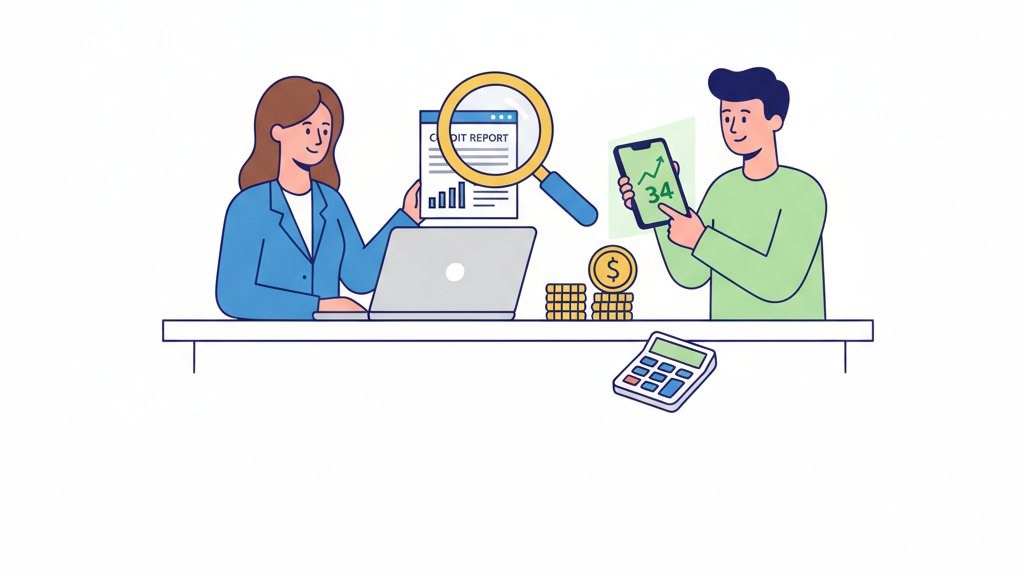
credit check — A credit check, also known as a credit inquiry or credit search, is a process where a lender or service provider reviews your financial history to assess your creditworthiness. This data is provided by credit bureaus and helps institutions determine the risk level of lending you money or providing services on credit.
How a credit check works
When you apply for a financial product, whether it is a mortgage, a credit card, or even a new mobile phone contract, the provider needs to ensure you have the capacity to pay them back. The process begins when you submit an application and grant the provider permission to view your credit file. In the United States, this information is typically sourced from one of the three major credit bureaus: Equifax, Experian, or TransUnion. These bureaus compile data from various sources, including banks, utility companies, and public records, to create a comprehensive profile of your financial behavior.
The mechanism behind a credit check involves analyzing several key data points: your payment history, the amount of debt you currently owe, the length of your credit history, and any public records such as bankruptcies or tax liens. Lenders use proprietary algorithms or standardized models like the FICO® Score to translate this data into a numerical value. A “hard” credit check occurs when a lender views your report for a lending decision, which can temporarily lower your score by a few points. Conversely, a “soft” check occurs when you check your own score or when a company performs a background check, which has no impact on your rating.
For a practical numerical example, consider two applicants, Anna and Mark, applying for a $10,000 personal loan. Anna has a credit score of 760 (Excellent) because she pays her bills on time and keeps her credit utilization below 10%. The lender views her as low risk and offers her an interest rate of 6%. Mark, however, has a credit score of 580 (Poor) due to several late payments and a high debt-to-income ratio. The credit check reveals this risk, leading the lender to either reject the application or offer a rate of 18%. Over a 3-year term, Anna would pay approximately $952 in interest, while Mark would pay $3,014—a difference of over $2,000 driven entirely by the results of the credit check.
Advantages and disadvantages of credit checks
Credit checks serve as a fundamental pillar of the modern financial system, providing benefits for both the consumer and the institution, though they are not without their drawbacks. Understanding these pros and cons is essential for maintaining a healthy financial profile.
| Advantages | Disadvantages |
|---|---|
| Access to lower rates: A positive credit check allows you to access the best market rates, saving thousands in interest over time. | Impact on credit score: Hard inquiries can cause a slight, temporary dip in your credit score (usually 5-10 points). |
| Fraud prevention: Regular credit checks help identify unauthorized accounts opened in your name, acting as an early warning system for identity theft. | Barriers to entry: For those with “thin” credit files or past mistakes, a credit check can lead to immediate rejection for basic services. |
| Objective evaluation: It provides a standardized way for lenders to judge applicants, reducing the risk of human bias in the approval process. | Data errors: Credit reports sometimes contain inaccuracies that can unfairly penalize a consumer until they are formally disputed. |
While the disadvantages might seem daunting, they are often manageable. For instance, the impact of a hard inquiry usually fades within a year, and consumers have the legal right to dispute errors on their reports. The primary advantage remains the ability for responsible borrowers to prove their reliability to any institution in the country instantly.
Credit check in practice and practical tips
In your daily life, you will encounter credit checks more often than you might expect. Beyond traditional banking, service providers use them to determine deposit requirements. For example, when comparing verizon plans, the company may perform a credit check to see if you qualify for a $0 down payment on a new smartphone. Similarly, if you are looking for progressive motorcycle insurance, your credit-based insurance score may influence the premium you are quoted in many states.
If you find yourself in a position where you cant get a loan anywhere due to a poor credit check result, it is vital not to panic. Often, this is a sign that you need to focus on credit repair before taking on more debt. However, if you must borrow for an emergency, you might look into specialized lenders. You can manage existing obligations or check your status by using a speedy cash login to view your account details, but be wary of high-interest rates associated with short-term credit products.
To navigate credit checks successfully, follow these practical tips:
- Space out applications: Avoid applying for multiple loans or credit cards in a short window. Use best loan brokers to compare multiple lenders with just a single soft credit pull, which protects your score.
- Monitor your report: Use free tools to check your report monthly. Look for “soft” inquiries and ensure no “hard” inquiries appear that you didn’t authorize.
- Check your utilization: Before applying for a major loan, try to pay down your credit card balances to below 30% of their limits. This can give your score a quick boost before the lender runs their check.
- Review the requirements: Before giving permission for a credit check, ask the provider what their minimum score requirement is. If you don’t meet it, don’t apply; it’s not worth the hard inquiry.
Frequently asked questions about credit check
Does checking my own credit score hurt my rating?
No. When you check your own credit score through a bank app or a credit monitoring service, it is considered a “soft inquiry.” This has absolutely no impact on your credit score and is not visible to lenders when they perform their own checks.
How long does a “hard” credit check stay on my report?
A hard credit check typically remains on your credit report for two years. However, its impact on your actual credit score usually diminishes much faster, often within 12 months, provided you don’t continue to rack up numerous inquiries.
Can an employer run a credit check on me?
Yes, in many jurisdictions, employers can request a modified version of your credit report as part of a background check, especially for roles involving financial responsibility. However, they must obtain your written consent first, and this is usually a soft pull that does not affect your score.